


A Parent’s Guide to Safer Sleep and Reducing the Risk of SIDS
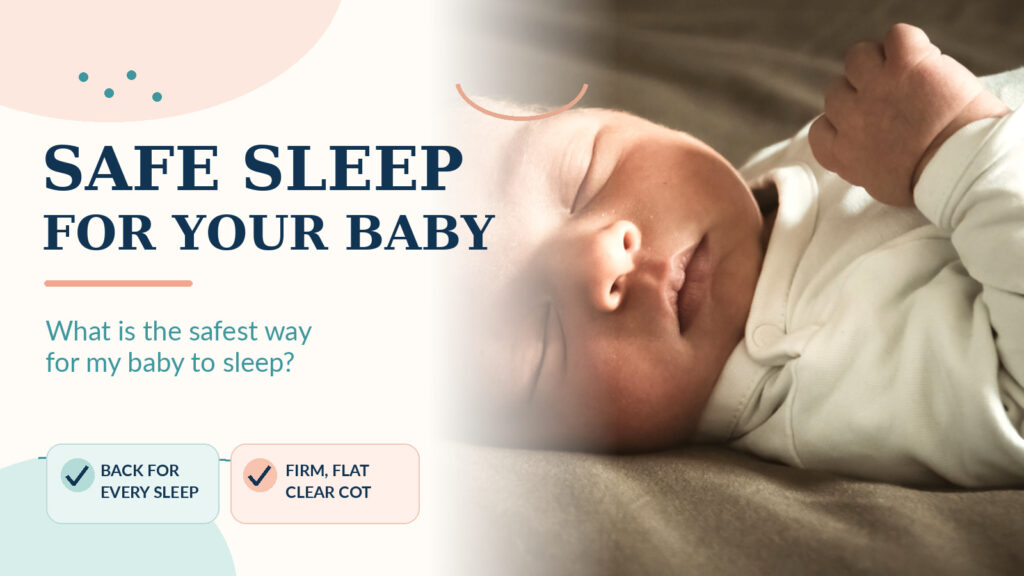
One of the most common questions asked by new parents is: “What is the safest way for my baby to sleep?”
Creating a safe sleep environment from birth is one of the most important things parents can do to protect their baby.
Following evidence-based safe sleep recommendations can significantly reduce the risk of sudden infant death syndrome (SIDS), also known as cot death.
What is sudden infant death syndrome (SIDS)?
Sudden infant death syndrome (SIDS) is the sudden and unexpected death of an apparently healthy infant between one month and one year of age that remains unexplained even after a thorough investigation, including a review of the baby’s medical history, examination of the circumstances surrounding the death and a complete post-mortem examination.
Although SIDS is rare, it remains one of the leading causes of death during the first year of life.
The risk is highest:
- Between 2 and 4 months of age;
- During the winter months;
- However, it decreases significantly after 6 months of age.
Did You Know?
Fortunately, the incidence of SIDS has fallen dramatically over the past three decades following public health campaigns promoting safe sleep practices.
Ten Safe Sleep Recommendations
The American Academy of Pediatrics (AAP) recommends the following measures to help reduce the risk of SIDS:
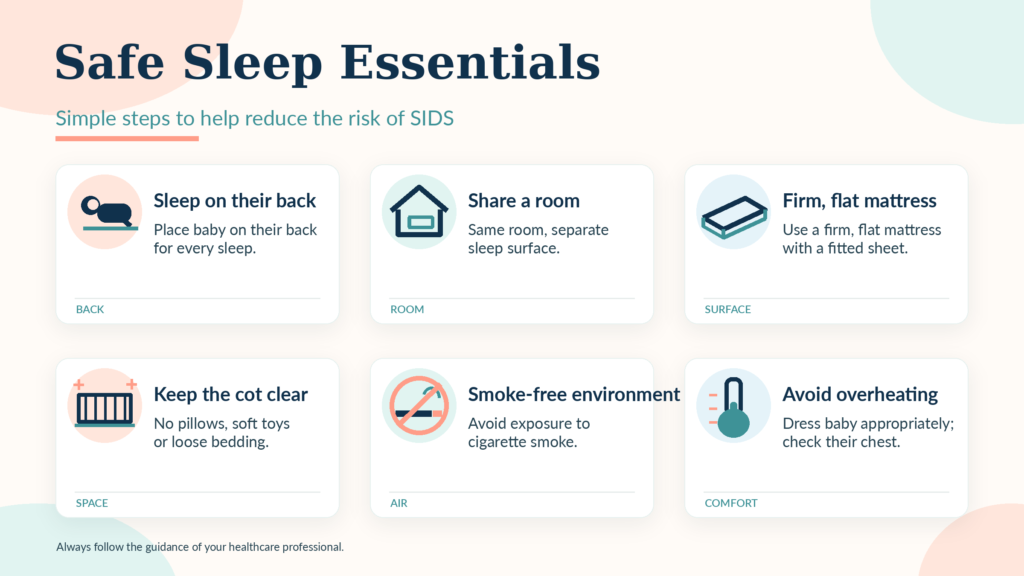
1. Always place your baby on their back to sleep
Babies should always be placed on their back (supine position) for every sleep, including daytime naps and overnight sleep, from birth.
Sleeping on the back is the safest position and has been shown to significantly reduce the risk of SIDS.
Once babies can roll independently from back to tummy and from tummy to back, there’s no need to reposition them during sleep. However, when first put down to sleep, they should always be placed on their back.
2. Share a room, but not a bed
It’s recommended by the American Academy of Pediatrics that babies sleep in the same room as their parents. However, it should be on a separate sleep surface for at least the first six months and ideally the first year of life.
Room-sharing without bed-sharing has been shown to reduce the risk of SIDS while allowing parents to feed, comfort and monitor their baby more easily during the night.
3. Use a firm, flat sleep surface
Your baby should sleep on a firm, flat mattress that fits the cot or crib correctly.
Avoid soft mattresses, sofas, armchairs or inclined sleep surfaces.
Pillows are not recommended for the first year of life.
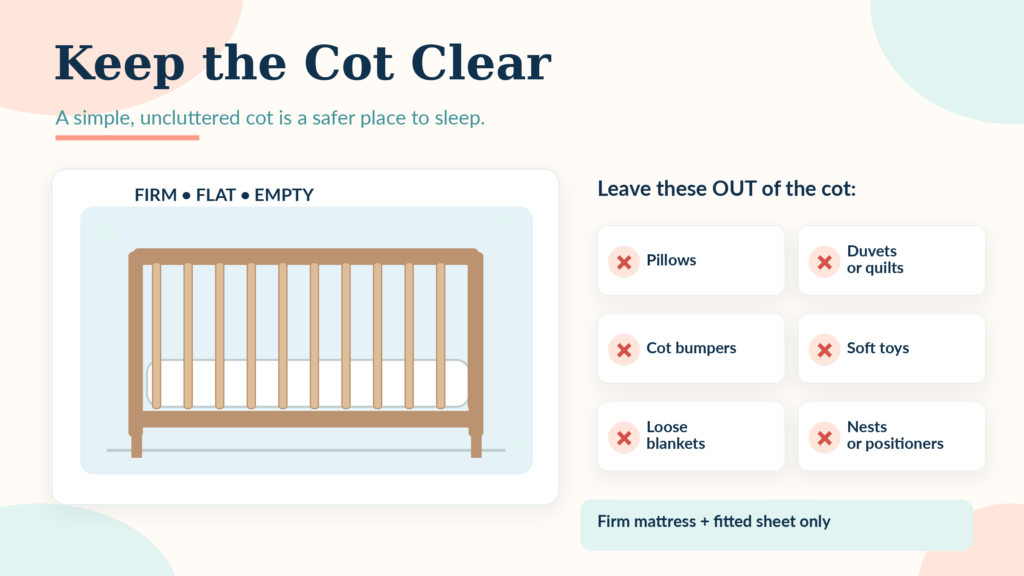
4. Keep the cot clear
The safest cot is a simple cot.
Don’t place any of the following inside your baby’s sleeping space:
- Pillows
- Duvets or quilts
- Cot bumpers
- Soft toys
- Loose blankets
- Sleep positioners or nests, unless specifically recommended by a healthcare professional.
These items may increase the risk of suffocation, entrapment or overheating.
5. Position your baby safely
If blankets are used, place your baby’s feet at the foot of the cot, with the blanket tucked securely below shoulder level so that it can’t cover the baby’s face.
Alternatively, a well-fitting baby sleeping bag that’s appropriate for your baby’s age and weight is a safe option.
6. Avoid overheating
Overheating is recognised as a risk factor for SIDS.
Keep the room at a comfortable temperature (around 18–20°C) and dress your baby appropriately for the environment. In general, babies should wear no more than one additional layer of clothing than an adult would wear to be comfortable in the same room. If your baby’s chest feels hot or they are sweating, they may be overdressed.
7. Avoid bed-sharing
The safest place for your baby to sleep is their own cot or crib, placed next to your bed.
Bed-sharing is linked to an increased risk of SIDS, especially if:
- Either parent smokes;
- Alcohol has been consumed;
- A parent has taken recreational drugs or medication that causes drowsiness;
- The parent is extremely tired;
- The baby was born prematurely or with a low birth weight;
- The baby is sleeping on a sofa or armchair with an adult.
8. Keep your baby away from cigarette smoke
Exposure to cigarette smoke during pregnancy and after birth is one of the strongest known risk factors for SIDS.
Your baby’s environment should always be completely smoke-free.
9. Breastfeeding provides additional protection
Research has shown that breastfeeding is associated with a lower risk of SIDS.
Exclusive breastfeeding appears to provide the greatest protection, although any amount of breast milk is beneficial. Breastfeeding also offers many other important health benefits for both mother and baby.
10. Consider offering a dummy at sleep time
Using a dummy (pacifier) when settling your baby to sleep has been associated with a reduced risk of SIDS.
If your baby refuses the dummy, there’s no need to force it. For breastfed babies, it’s generally recommended to introduce a dummy once breastfeeding has been well established.
Frequently Asked Questions About SIDS
Can my baby sleep on their side?
No. Babies should always be placed on their back. The side position is unstable and babies can easily roll onto their tummy.
What if my baby rolls over during sleep?
Once your baby can roll independently in both directions, you don’t need to reposition them. However, always place your baby on their back at the beginning of every sleep.
Can my baby sleep in a car seat?
Car seats are designed for travel, not for routine sleep. If your baby falls asleep during a journey, move them to a flat sleep surface as soon as it is practical and safe to do so.
Should I use a sleep positioner?
No. Sleep positioners, wedges and similar products aren’t recommended for healthy babies unless specifically advised by a healthcare professional.
Key Take-Home Messages
To help reduce the risk of SIDS:
- Always place your baby to sleep on their back;
- Share a room, but not a bed, for at least the first six months and ideally for the first year;
- Use a firm, flat mattress;
- Keep the cot free from pillows, soft toys and loose bedding;
- Avoid overheating;
- Maintain a smoke-free environment;
- Breastfeed if possible;
- Consider offering a dummy at sleep time once breastfeeding is established.
Final Thoughts
The vast majority of babies sleep safely and thrive during their first year of life. Although SIDS is a rare event, following simple, evidence-based safe sleep recommendations can significantly reduce the risk.
If you have any concerns about your baby’s sleep, feeding or development, please consult your paediatrician or healthcare professional. Early advice and reassurance can make all the difference for new parents.